Reviewed by: Professor Yuri Nikolsky and Mariya Kurilina, founders of Santa Maria
Last updated: October 2026
“My tests are normal.”
“I took the antibiotics, and I still feel sick.”
“My doctor says it’s all over. So why can’t I get out of bed?”
If you’ve said any of these, you’re not imagining it, and you’re not alone. Many people finish Lyme treatment and never feel like themselves again. The fatigue and brain fog stay. And after a while, people stop believing you.
Our founder, Mariya, knows this road. For eight years she lived with more than twenty unexplained symptoms and saw more than 60 doctors in five countries. Again and again she heard, “Your tests look normal.” In 2017 a reference laboratory in Palo Alto finally found the answer: chronic Lyme disease with a co-infection. Long courses of antibiotics alone weren’t enough for her. That experience became Santa Maria.
Here’s what the science says about lingering Lyme symptoms, why co-infections are so often missed, and what an integrative approach can look like.
What is chronic Lyme, or “post-treatment Lyme disease syndrome”?
Lyme disease comes from a bacterium, Borrelia burgdorferi, spread by ticks. Most people treated early with 2 to 4 weeks of antibiotics recover. But some don’t.
When symptoms continue after treatment, the U.S. Centers for Disease Control and Prevention (CDC) calls it post-treatment Lyme disease syndrome (PTLDS). The most common symptoms are fatigue, body aches and trouble thinking. The CDC says the cause is not known.
How many people does this affect? Estimates vary. Harvard’s Lyme resource puts it at 10 to 20% of treated patients. Researchers at Johns Hopkins have estimated it could be about one in five or six.
If you’ve been dismissed, this matters. In a Johns Hopkins study, people with PTLDS had serious, lasting fatigue, pain and sleep problems, even though their exams and standard lab tests looked mostly normal. The lead researcher, Dr. John Aucott, called PTLDS “a real disorder.”
A note on words: the CDC avoids the term “chronic Lyme disease,” because it suggests an ongoing infection that hasn’t been proven. Many patients and some doctors still use it.
Co-infections: Bartonella, Babesia and why they’re missed
A single tick can carry more than one germ. The deer ticks that spread Lyme can also carry Babesia, Anaplasma and other infections. Ehrlichia is spread by other tick species.
Babesia is not a bacterium. It’s a tiny parasite that lives inside red blood cells, a bit like malaria. That’s important, because common Lyme antibiotics, such as doxycycline, are not the standard treatment for Babesia. The CDC’s guidance for people who are ill is a different combination of medicines (usually atovaquone plus azithromycin).
So if only the Lyme is treated, a person with both may not fully recover. An older study in JAMA found that about 1 in 10 Lyme patients in one area also had Babesia. Half of those with both infections still had symptoms three months later, compared with 4% of those with Lyme alone. It was a small study, but it shows why co-infections are worth looking for.
Bartonella is more debated. It spreads through cat scratches and fleas. Whether ticks pass it to people is still an open question. Some researchers see it as a real possibility. Others say tick transmission has not been proven. We think you deserve to know about this debate rather than be told one side as fact.
Why are co-infections missed?
- Standard Lyme tests don’t look for them.
- Their symptoms (fatigue, night sweats, headaches, nerve pain) overlap with Lyme and with many other conditions.
- Some tests are hard to read. For example, Babesia antibodies can stay in the blood long after the infection is gone.
The point isn’t to assume every infection. It’s to ask the right questions, based on your history.
Why antibiotics alone may not be enough: what research says
This is where doctors disagree, and we want to be honest about both sides.
The mainstream view. The 2020 guidelines from the Infectious Diseases Society of America (IDSA), with neurology and rheumatology groups, recommend against more antibiotics for lingering, non-specific symptoms, unless there’s clear proof of an active infection. A large Dutch trial in the New England Journal of Medicine gave patients 12 extra weeks of antibiotics or a placebo. Neither group did better than the other. The CDC also warns that long-term antibiotics can cause serious harm.
The other view. Groups such as ILADS (the International Lyme and Associated Diseases Society) believe some patients may still have an infection that standard treatment didn’t clear. Lab research gives them reasons to ask:
- “Persister” bacteria. At Johns Hopkins, Dr. Ying Zhang’s team found that some forms of the Lyme bacterium can survive standard antibiotics in the lab. These forms can clump together in biofilm-like colonies that are harder to reach.
-
Animal studies. A Tulane study in monkeys found traces of the bacteria, and a few intact organisms, after intensive antibiotic treatment.
-
A new, gentler antibiotic option. In April 2025, a Northwestern University team led by microbiologist Brandon Jutras reported in Science Translational Medicine that piperacillin, a penicillin-class antibiotic, cleared Lyme infection in mice at a dose about 100 times lower than doxycycline, with almost no effect on healthy gut bacteria.
These are lab and animal studies. They don’t prove the same happens in people, and human trials are still being planned.
What both sides can agree on. Your symptoms are real, and the cause likely differs from person to person: a lingering infection, a co-infection, an immune system stuck “on,” or several at once. That’s why one tool, used alone, often isn’t enough.
An integrative approach: how the Santa Maria Method works for complex chronic infections
Santa Maria is a doctor-led integrative clinic. Our approach to Lyme is informed by ILADS and by integrative doctors who have worked with chronic Lyme for decades. We don’t replace your own doctor. We work alongside them. And the order matters.
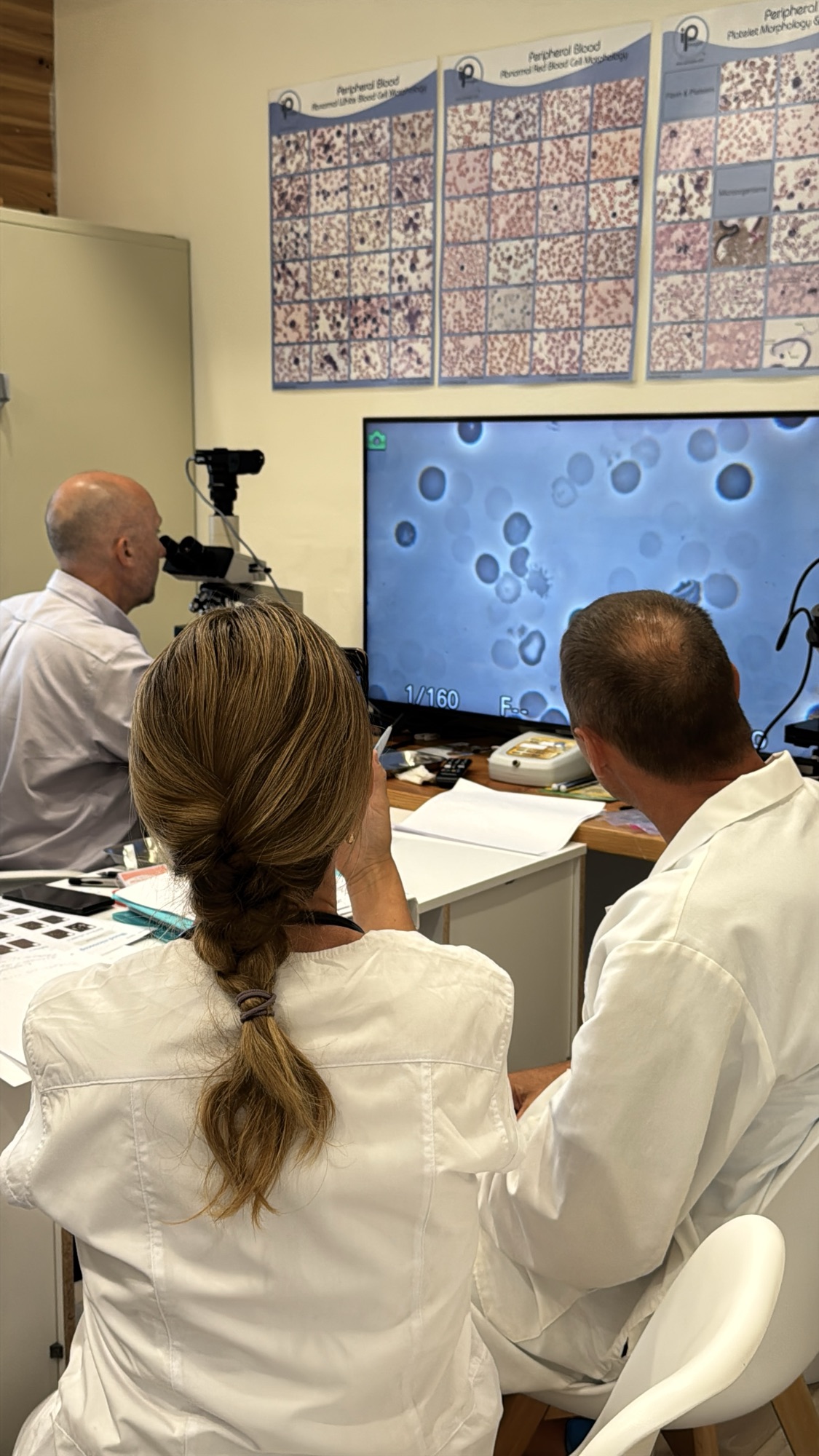
1. Diagnose. A consultation with our doctor and a careful review of every test and treatment you’ve had. Lab work for inflammation, immunity, blood sugar, liver, kidneys and vitamins. An ultrasound of your organs. Live blood microscopy on your first and last day, which you see on a screen with us. (It’s a visual tool. It doesn’t replace lab tests.) When your history points to it, we add tests for Lyme and co-infections such as Bartonella and Babesia, viruses such as Epstein-Barr, parasites, Candida and immune function, through our partner laboratory, at extra cost.
2. Cleanse & Reset. Years of infection, medicines and inflammation can overload the body’s “exits”: the liver, lymph and gut. So we don’t start with the infection. We start by opening the exits, with a liver and gallbladder cleanse (after an ultrasound check), lymphatic drainage, the Slavic banya and detox foot baths, plus support for your energy, gut, nerves and sleep.
3. Target. Then we work on the infections and inflammation. Depending on your case, this may include ozone therapy, intravenous laser therapy, high-dose vitamin C and other IVs, an anti-parasite protocol and personal herbal formulas. When the doctor decides it’s right for you, antibiotics can be part of the plan during your stay and after you go home. Informed by the 2025 Northwestern research, our doctors may use low-dose piperacillin by IV, which is gentler on the gut than long courses of doxycycline. This is an off-label use based on early research, and the doctor discusses it with you first.
4. Regenerate. We help restore tissues, energy and immunity.
5. Maintain. You go home with a written plan for about three months: what to continue, which labs to repeat, and what to follow up on with your own doctor.
On the All-Inclusive Complete Health Program, you receive 8 to 12 treatments a day, with up to 3 IVs a day when appropriate. Your medical team adjusts the plan every day as you respond. For chronic Lyme, we recommend a first stay of 2 to 4 weeks: at least 2 weeks, and 3 weeks is best. A second stay about 6 months later helps you keep the progress.
What a week looks like
| Day | What happens |
|---|---|
| Sunday | Arrive between 3 and 6 pm. Welcome, tour, and meet your coordinator. |
| Monday | Blood work at 8 am on an empty stomach. Consultation with the doctor and live blood microscopy. First treatments. Slavic banya after dinner. |
| Tuesday | Juice day. Abdominal ultrasound to make sure the liver cleanse is safe for you. |
| Wednesday | Liver and gallbladder cleanse: a gentle day of rest, with our team beside you. |
| Thursday–Friday | Cleanse and restore. Banya after dinner on Friday. |
| Saturday | Final consultation, second microscopy, and your plan for home. |
Treatments run from about 9 am to 6 pm. Your private room, three meals a day and daily transport are included, plus a hot-springs day on stays of 10 days or longer.
Prices: 7 days from $5,900 · 10 days $7,900 · 14 days $10,900 · 21 days $15,900. An $800 deposit reserves your dates. See all options on Programs & Prices.
How to prepare and what to bring
Please bring:
- Any test results you already have, including Lyme and co-infection tests. You don’t need to do any special lab work before you come: we run our own tests when you arrive.
- Your treatment history: which antibiotics or other treatments you took, for how long, and how you reacted
- Recent lab work and medical reports
- A list of your medications and supplements, and the medications themselves
- Your passport or passport card to cross back into the U.S.
- Comfortable clothes, sports shoes, a swimsuit and slippers for the banya and pool, and something warm for windy ocean evenings
You can also send your records ahead on WhatsApp, so the doctor can review them before your first consultation.
Please don’t stop any medication on your own. Talk to your doctor, and tell us about everything you take.
Our programs aren’t right for everyone. We’re a clinic, not a hospital. For safety we can’t accept people with an acute infection or fever, pregnancy, a pacemaker, or severe heart or kidney failure, among other conditions.
Frequently asked questions
Is chronic Lyme real?
Your symptoms are real. Major medical groups agree that some people stay sick after Lyme treatment. What they disagree on is the cause, and the best way to help.
Do you treat Lyme with antibiotics?
Sometimes, yes. Your plan is built by our doctor after reviewing your history. It may include IVs, ozone, herbal formulas and, when appropriate, antibiotics during your stay and after, including low-dose IV piperacillin informed by 2025 research. We work alongside your own doctor and don’t ask you to give up conventional care.
Can you test for Bartonella and Babesia?
Yes, when your history points to it, through our partner specialty laboratory. The extended panel for Lyme and co-infections costs about US$650.
Will I feel worse before I feel better?
Some people feel tired or a little unwell for a day during a cleanse. That’s why we open the body’s exits first, before working on infections.
How long should I stay?
For chronic Lyme, we recommend 2 to 4 weeks on your first visit: at least 2 weeks, and ideally 3. A second stay about 6 months later helps you keep your progress.
How far is Santa Maria from San Diego?
About 50 minutes from the San Diego border, on the ocean in Playas de Rosarito. Our trusted driver can meet you at San Diego airport or the border ($120 each way). Santa Maria is registered with COFEPRIS, Mexico’s federal health regulator.
Talk to us first. It’s free.
If you’ve heard “your tests are normal” one too many times, we’d like to hear your story. In a free consultation, our team reviews your history and tells you honestly whether our program fits. We don’t promise a cure. We promise a clear process, done in the right order, alongside your own doctors.
More than 4,000 guests have stayed with us since 2020. We speak English, Spanish and Russian.
Book your free consultation on WhatsApp: +1 858-667-7477
Learn more on our Lyme & Chronic Infections page.
Medical disclaimer: This article is for education only and does not replace advice from your own doctor. Santa Maria does not claim to cure Lyme disease or any other condition. All programs and treatments depend on a medical evaluation, and individual results vary. Live blood microscopy is an observational tool, not a diagnostic test. If you have severe or new symptoms, see a doctor right away.
Sources
- CDC. Post-Treatment Lyme Disease Syndrome. https://www.cdc.gov/lyme/postlds/
- Harvard Medical School Lyme resource. Persistent symptoms of Lyme disease. https://www.lyme.health.harvard.edu/persistent-symptoms-of-lyme-disease
- Johns Hopkins Medicine (2018). Study shows evidence of severe and lingering symptoms in some after treatment for Lyme disease. https://www.hopkinsmedicine.org/news/newsroom/news-releases/2018/02/study-shows-evidence-of-severe-and-lingering-symptoms-in-some-after-treatment-for-lyme-disease
- Johns Hopkins Medicine (2021). PTLD: Recent advancements in long-haul Lyme disease research. https://www.hopkinsmedicine.org/news/articles/2021/02/ptld-recent-advancements-in-long-haul-lyme-disease-research
- Lantos PM, et al. 2020 IDSA/AAN/ACR Guidelines for the Prevention, Diagnosis and Treatment of Lyme Disease. Clin Infect Dis 2021;72(1):e1–e48. doi:10.1093/cid/ciaa1215
- Berende A, et al. Randomized trial of longer-term therapy for symptoms attributed to Lyme disease. N Engl J Med 2016;374:1209–1220. doi:10.1056/NEJMoa1505425
- Feng J, Zhang Y, et al. Three-antibiotic combination clears persister Lyme bacteria in mouse study (Johns Hopkins Bloomberg School of Public Health, 2019). https://publichealth.jhu.edu/2019/three-antibiotic-cocktail-clears-persister-lyme-bacteria-in-mouse-study
- Embers ME, et al. Persistence of Borrelia burgdorferi in rhesus macaques following antibiotic treatment of disseminated infection. PLoS ONE 2012;7(1):e29914. https://pmc.ncbi.nlm.nih.gov/articles/PMC3256191/
- Krause PJ, et al. Concurrent Lyme disease and babesiosis: evidence for increased severity and duration of illness. JAMA 1996;275(21):1657–60. https://jamanetwork.com/journals/jama/article-abstract/403174
- CDC. Clinical Overview of Babesiosis. https://www.cdc.gov/babesiosis/hcp/clinical-overview/
- MSD Manual Professional. Babesiosis. https://www.msdmanuals.com/professional/infectious-diseases/extraintestinal-protozoa/babesiosis
- Telford SR, Wormser GP. Bartonella spp. transmission by ticks not established. Emerg Infect Dis 2010;16(3). https://wwwnc.cdc.gov/eid/article/16/3/09-1685_article
- Billeter SA, Levy MG, Chomel BB, Breitschwerdt EB. Vector transmission of Bartonella species with emphasis on the potential for tick transmission. Med Vet Entomol 2008;22(1):1–15. https://doi.org/10.1111/j.1365-2915.2008.00713.x
- ILADS. https://www.ilads.org/
- Northwestern University (April 2025). The antibiotic that takes the bite out of Lyme (piperacillin, Science Translational Medicine). https://news.northwestern.edu/stories/2025/04/the-antibiotic-that-takes-the-bite-out-of-lyme